


Object Details
Catalogue Note
Dimensions: H 44 × W 32 cm | Material: cast iron with surviving gilding | Estimated period: Qing period, probably 18th–19th century | Origin: China | Mudra: Bhumisparsha Mudra
A substantial Chinese Buddha cast in iron and finished with an aged gilt surface. The figure is seated in bhumisparsha mudra and has the robust material character associated with Chinese iron Buddhist sculpture.
Attribution
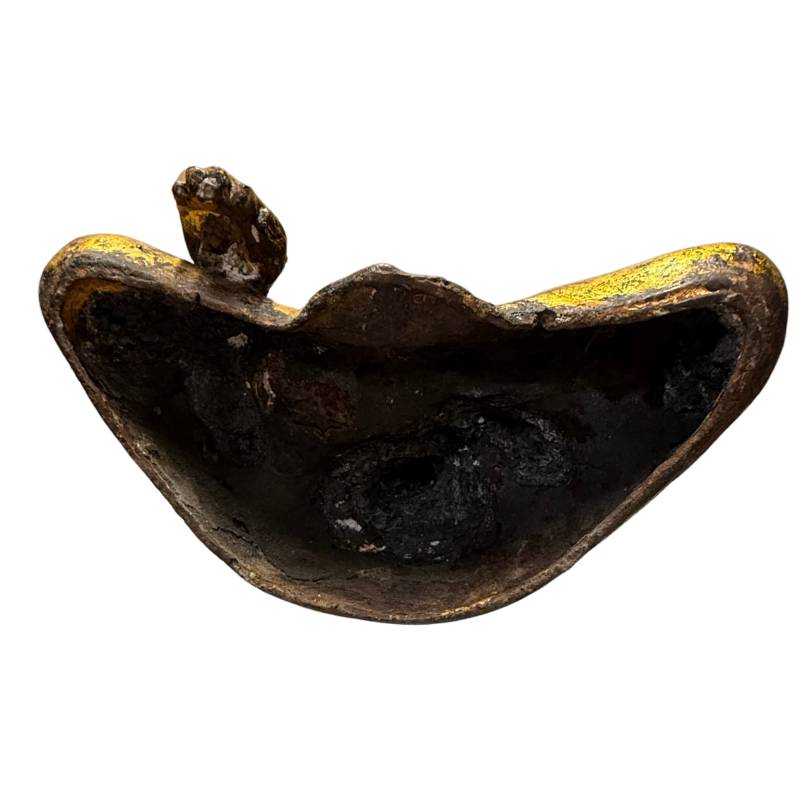
The sculpture is attributed broadly to the Qing period, probably 18th–19th century. Internal mineralisation, retained core material and surface wear are documented condition features but do not by themselves establish date.
Condition
Historic wear and losses to gilding. A genuine old break at the hand exposes the internal structure and should be regarded as part of the condition of the object.
Iconography and Context
Bhumisparsha Mudra is the earth-touching gesture associated with Shakyamuni calling the earth to witness his awakening. The lowered right hand turns the stable seated image into a direct reference to the moment of Enlightenment.
Condition and Display
Surviving gilding, darker recessed areas and wear on raised details create a layered surface. The 11 photographs document the remaining finish, patina, casting and base from multiple viewpoints.
