


Object Details
Catalogue Note
Dimensions: H 10.5 × W 7.1 cm
Weight: 460 g
Material: Bronze / copper alloy
Estimated period: Possibly 14th–16th century
Origin: Tibetan or northeastern Indian Pala-influenced tradition
Subject: Shakyamuni Buddha
Format: Portable devotional image / travel shrine
A dense small Buddhist shrine centred on Shakyamuni Buddha, seated above an architectural throne decorated with elephants, makara and a vajra motif. Its compact scale makes it consistent with a portable devotional image or travel shrine.
Iconography
The throne imagery draws on the Pala-derived visual vocabulary that spread from northeastern India into the Himalayas. Makara, elephants and the vajra are integrated into the support beneath the Buddha.
Attribution and condition
The object has been attributed to a Tibetan or northeastern Indian Pala-influenced tradition, possibly 14th–16th century. This dating remains provisional. The bronze shows dark accretions, polished high points, casting irregularities and an aged surface.
Iconography and Context
The composed posture and restrained expression belong to the visual language of Buddhist devotional sculpture. Balance, stillness and clearly readable gestures allow the image to function both as a sacred object and as a focused sculptural presence.
Condition and Display
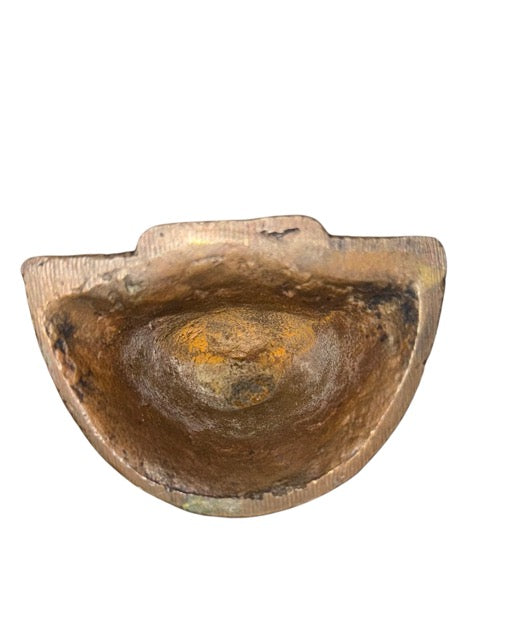
The bronze / copper alloy surface shows the tonal variation, patina and raised-detail wear described in the catalogue note. The 9 photographs document the sculpture from multiple angles, including the reverse and base.
