


Object Details
Catalogue Note
Dimensions: H 80 × W 70 cm
Weight: 31.6 kg
Material: Carved hardwood with red lacquer, gilding and mirror-glass inlay
Estimated period: Late 19th to early 20th century, circa 1880–1920
Origin: Burma / Myanmar
Style: Mandalay
Mudra: Bhumisparsha Mudra
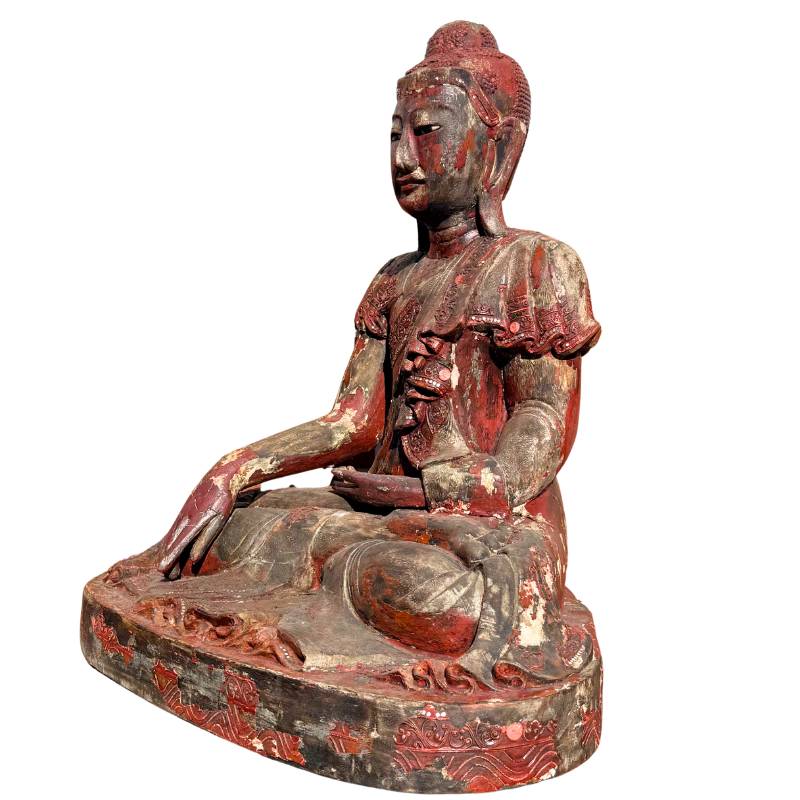
A substantial Burmese Mandalay Buddha carved from dense hardwood. The robe retains traces of red lacquer, worn gilding and small mirror-glass elements, a decorative language closely associated with Burmese temple sculpture.
The sculpture is attributed to the late 19th to early 20th century, circa 1880–1920, based on its Mandalay style, traditional carved-wood construction and layered lacquer, gilding and mirror-glass surface. The extensive wear, losses and historic repairs are consistent with prolonged age and devotional use.
Condition
Older condition with lacquer and gilt loss, missing inlay, cracks, patina and normal historic repairs or surface variation.
Iconography and Context
Bhumisparsha Mudra is the earth-touching gesture associated with Shakyamuni calling the earth to witness his awakening. The lowered right hand turns the stable seated image into a direct reference to the moment of Enlightenment.
Condition and Display
The carved hardwood retains visible grain, tool marks and naturally varied colour beneath the surviving lacquer, gilding and mirror-glass decoration. The 18 photographs document the carving, profiles, reverse, underside and age-related surface character as part of the condition assessment.
Research & Construction Study
We examined this sculpture’s underside, sectional wooden construction, historic repairs, lacquer, gilding and surviving inlay in detail. Read the full object research in our Research Library.
