


Object Details
Catalogue Note
Dimensions: H 113 × W 31 cm | Weight: 23 kg | Material: thin-walled gilt bronze / karakane-type copper alloy | Estimated period: Edo period, possibly 17th–18th century | Origin: Japan | Subject: Sho-Kannon
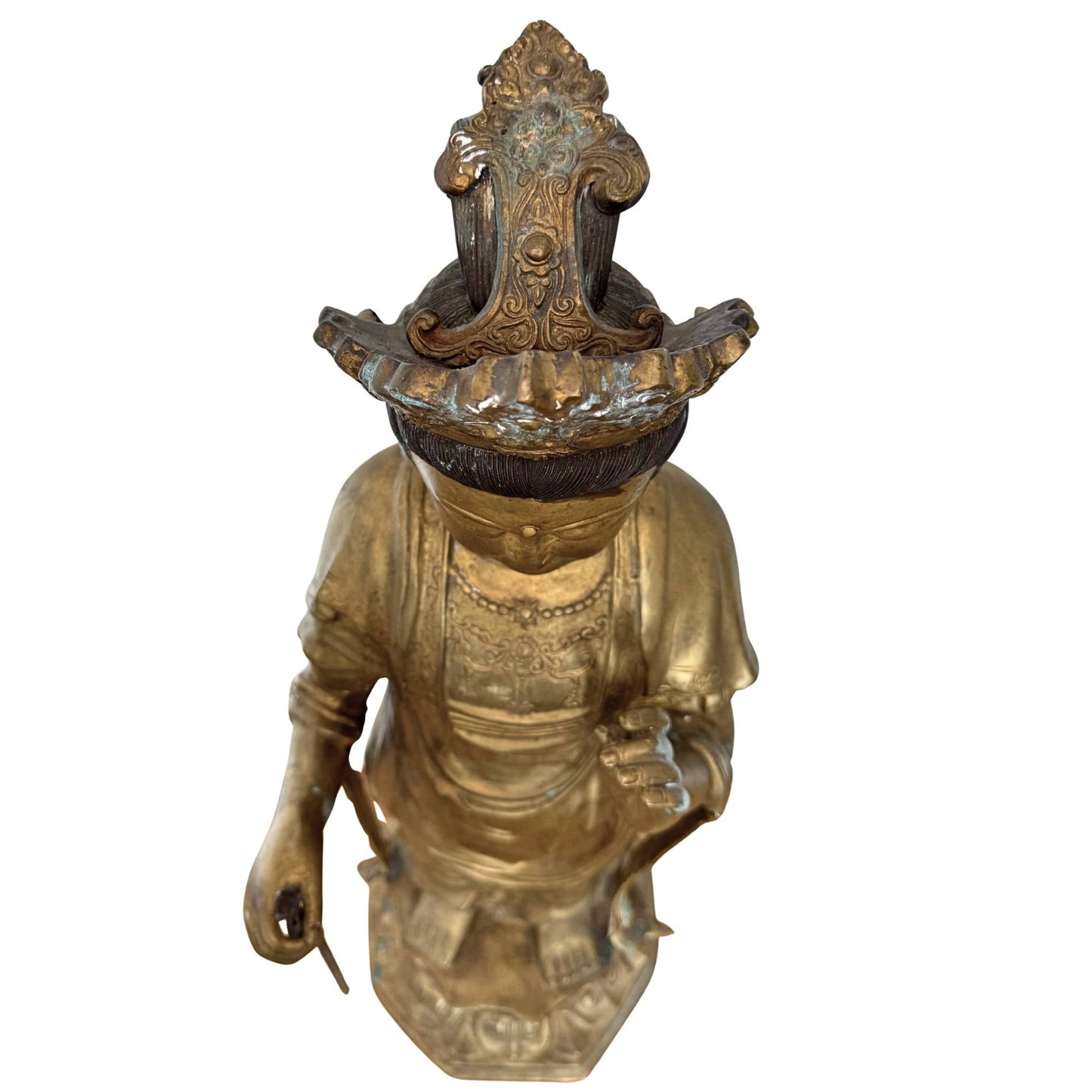
A monumental standing Sho-Kannon, the Japanese form of Avalokiteshvara, raised on a double lotus and hexagonal pedestal. The unusually light weight relative to the scale reflects controlled hollow casting rather than a solid construction.
Iconography
Sho-Kannon is one of the principal forms of Kannon in Japanese Buddhism. The restrained frontal posture and princely ornament give the figure a formal temple presence.
Attribution and condition
The sculpture is attributed broadly to the Edo period, possibly the 17th–18th century. White mineral accretions, surviving gilt areas and long-term surface wear are present, but none of these features alone establishes the date. A detailed technical and provenance review is appropriate for such a high-value attribution.
Iconography and Context
Guanyin, Avalokiteshvara or Chenrezig is the bodhisattva of compassion. Crown, lotus, vase and hand gestures vary by region, but the subject consistently embodies attentive mercy and aid.
Condition and Display
Surviving gilding, darker recessed areas and wear on raised details create a layered surface. The 13 photographs document the remaining finish, patina, casting and base from multiple viewpoints.
